Disclosure: This post may contain affiliate links. If you buy through them, I earn a small commission at no extra cost to you. I only recommend tools I’d actually use.
Starting a finance blog feels like planting a money tree. You expect fast growth. The truth is slower, messier, and way more valuable than any income report you’ll find online.
After running EasyFinanceInsights for a full year, I’ve collected real lessons that no blogging course will sell you. Here’s what actually moves the needle and what I’d do differently from day one.
In This Guide:
Consistency Beats Clever Content Every Single Time
Around month three, I spent two weeks on what I thought was a perfect post. It got fewer views than something I wrote in 90 minutes.
Year one teaches this fast. Google doesn’t reward your masterpiece. It rewards patterns. Showing up on a predictable schedule builds topical authority — the signal that your blog owns a specific corner of a subject.
What consistency actually means in practice
One post a week. Even if you’re not happy with the draft. Even if no one reads it yet. A one-year-old blog with 52 posts beats one with 8 “perfect” ones in every SEO ranking factor that matters.
I started with a side hustle series and a basic budgeting guide. Not flashy. But consistent content around two tight topics sent the right signals to search engines early on.
Key rule: Set a schedule you can hold for six months, not six weeks. Burnout breaks more blogs than bad content.
Your Email List Is the Only Asset You Truly Own
Pinterest reach can collapse overnight. A Google update can cut your traffic in half. Your email list? That’s yours. Always.
I started building mine at month four. That was too late. Every post I published without a visible opt-in was a missed chance to keep a reader who might never come back.
Why this matters specifically for finance blogs
Personal finance is a trust-based niche. People don’t subscribe to strangers. They subscribe to someone whose advice helped them solve a real problem. When a reader joins your list, they’ve crossed a trust threshold that no page view stat can measure.
Tool Recommendation
I use Beehiiv for my “Invest Small, Think Big” newsletter. It’s built for growth, with referral programs, subscriber analytics, and clean templates. If you’re starting a finance newsletter from zero, it’s the platform I’d pick today.
What to offer instead of “subscribe to my newsletter”
Nobody wakes up wanting another newsletter. They want a fix. Offer a free budget template, a savings tracker, or a one-page money checklist. Give people a concrete reason to hand over their email.
Brand Trust Takes Longer Than Traffic, But It Lasts Longer Too
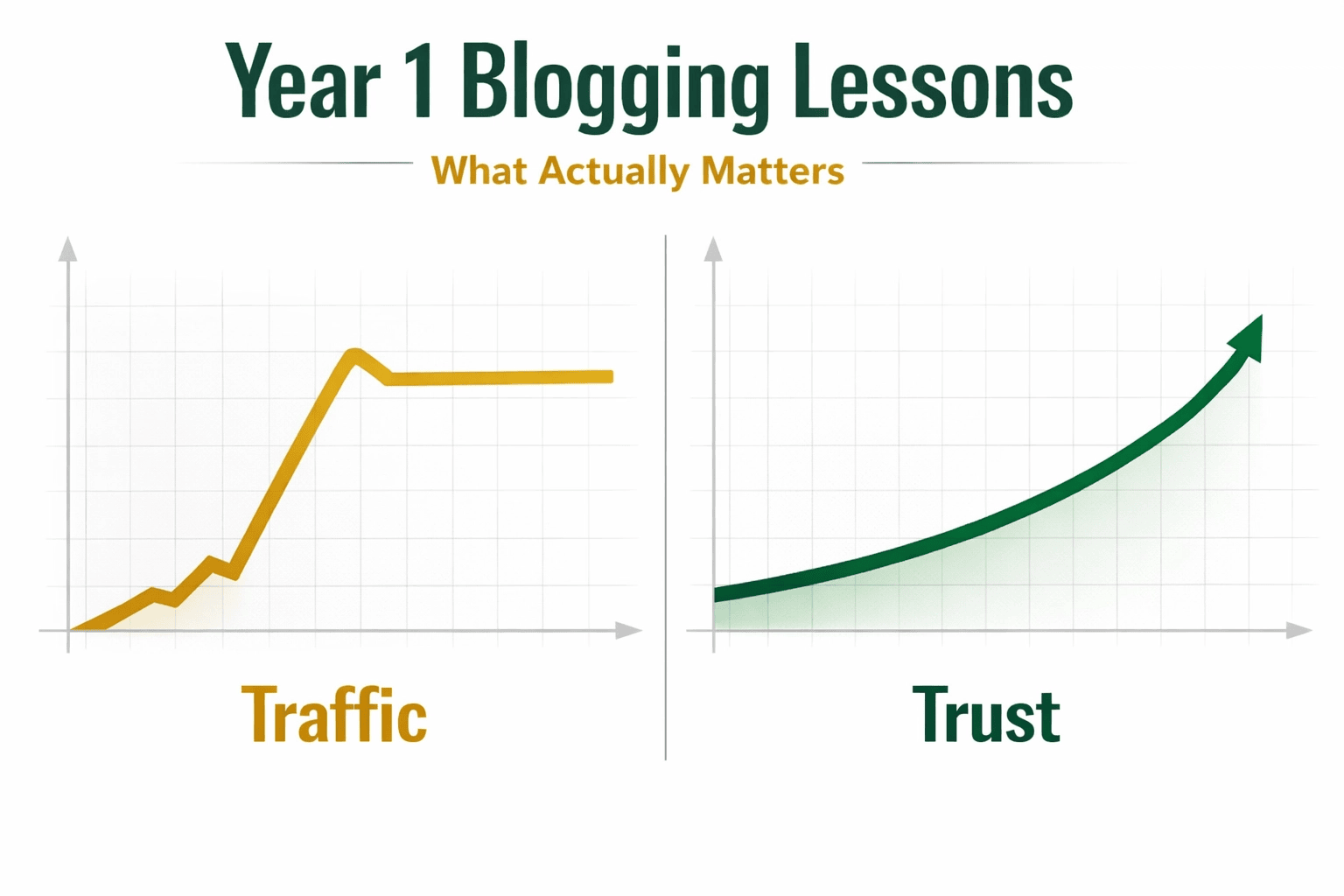
Traffic can spike from one good pin. Trust can’t. Trust is the sum of 50 honest articles, one consistent voice, and a promise you never break with your readers.
In year one, I tracked metrics I could see: page views, session duration, Pinterest monthly views. The invisible metric, trust, was the one that determined whether anyone came back or bought anything.
Your brand is what someone remembers when they can’t recall the exact post. “That blog that explains money stuff without talking down to you.” That’s the actual goal.
Posting accurate information, holding one clear brand voice, and being honest when you don’t know something are the three things that build reader trust faster than posting frequency alone. I covered the mindset side of this in my post on the psychology of money.
The Honest Truth About SEO in Year One
I published 30 posts before I saw meaningful organic traffic. That felt discouraging. But that’s the timeline for a new domain. No shortcuts exist.
Year one isn’t about ranking. It’s about writing the posts that will rank in year two. Every keyword-targeted piece you write now is a seed. Search engines need time to trust a new domain before they send readers your way.
Two things shortened my timeline: connecting posts to each other with internal links early on, and answering questions people actually search for. My financial goals checklist post gained traction because it answered a specific question, not because I wrote it well.
Monetization in Year One: Build Foundation, Not Revenue
Don’t build for $100 a month in ad revenue. Build for $1,000 a month in audience trust. The blogs that scale past year one have readers who follow them, not just one-time visitors who found a post on Google.
In year one, the four moves worth your time are: building your email list, creating one lead magnet that proves your value, joining one affiliate program aligned to your niche, and passing on every sponsored opportunity that doesn’t fit your audience.
Your beginner-friendly posts are your gateway content. They bring in new readers. Your email list is what keeps them coming back.
Year One Finance Blog Checklist
- ☐Set a weekly publishing schedule you can hold for 6+ months
- ☐Add a visible email opt-in on your homepage and every post
- ☐Create one free lead magnet (template, checklist, or guide)
- ☐Choose 2-3 content topics and stay inside them for 6 months
- ☐Add internal links to every post before publishing
- ☐Join one affiliate program that matches your niche
- ☐Track email subscribers weekly, not just page views
- ☐Review and update your 5 oldest posts every quarter
Mistakes I Made (So You Don’t Have To)
“I need to be on every platform at once.” Wrong. I spread myself across Pinterest, Instagram, and Twitter in the first two months. Pick one platform, go deep, then expand. I learned this after three months of weak results everywhere.
“My content isn’t good enough to promote yet.” This is procrastination with a polished excuse. Imperfect content that reaches people beats perfect content that sits in drafts. Publish it. Fix it later when you know what your audience actually needs.
“I’ll start the email list once I have traffic.” Backwards. The email list is what creates consistent traffic. Start capturing emails from post number one, even if it’s just 10 people in month one.
“More posts equals more traffic.” Not in year one. Six well-targeted posts outperform 30 random ones. Depth inside a tight niche beats scattered volume every time.
Frequently Asked Questions
How long does it take to grow a personal finance blog?
Most personal finance blogs see meaningful organic traffic between months 9 and 18, depending on publishing frequency and keyword targeting. Consistent publishing, internal linking, and a focused niche topic cluster all accelerate the timeline.
Can you make money from a personal finance blog in the first year?
Yes, but the amounts are typically small. Most first-year finance bloggers earn through affiliate commissions on a handful of posts. Consistent income usually starts in year two once you have a growing email list and established organic traffic.
How do I build an email list for my finance blog?
Add an opt-in form to your homepage, sidebar, and the bottom of each post from day one. Offer a free lead magnet — a budget template, savings tracker, or checklist works well. Use a newsletter tool like Beehiiv or MailerLite to manage and send your list.
What mistakes do first-year finance bloggers make most often?
The most common: spreading across too many platforms, delaying email list building, covering too many topics, and measuring only page views. Email subscriber count and return visitor rate are more predictive of long-term success.
Is personal finance blogging worth it in 2026?
Yes, if you’re willing to play the long game. Personal finance is a high-value niche with strong affiliate potential. AI search tools like Perplexity and Google AI Overviews now cite well-structured finance content, opening new discovery channels beyond traditional SEO.
Keep Reading
The Real Year-One Win Is Who You Build, Not What You Earn
Most bloggers quit in year one because they measure the wrong things. Track trust, email growth, and content depth, and you’ll stay motivated long enough to see the results that only show up in year two and beyond.
The lessons here cost me months of trial and error. You don’t have to repeat them. Start your email list today. Pick two niche topics. Show up every week. That’s the whole strategy.
What’s the one thing from this list you’re going to act on first? Drop it in the comments below.
Want More Tips Like This?
Join the Invest Small, Think Big newsletter. No spam. Just simple money moves that actually work, delivered weekly.
Leave a Reply