Stop Guessing, Start Knowing
Do you feel anxious when you think about your bank account? You know you’re doing okay, but you don’t actually know if you’re on the right track.
Just as you schedule an annual physical for your body, your finances deserve a yearly check-up. This is a simple, honest self-assessment to ensure your money supports the life you want.
Grab a cup of coffee. Let’s walk through the seven most important questions you need to answer every year to achieve true money health.
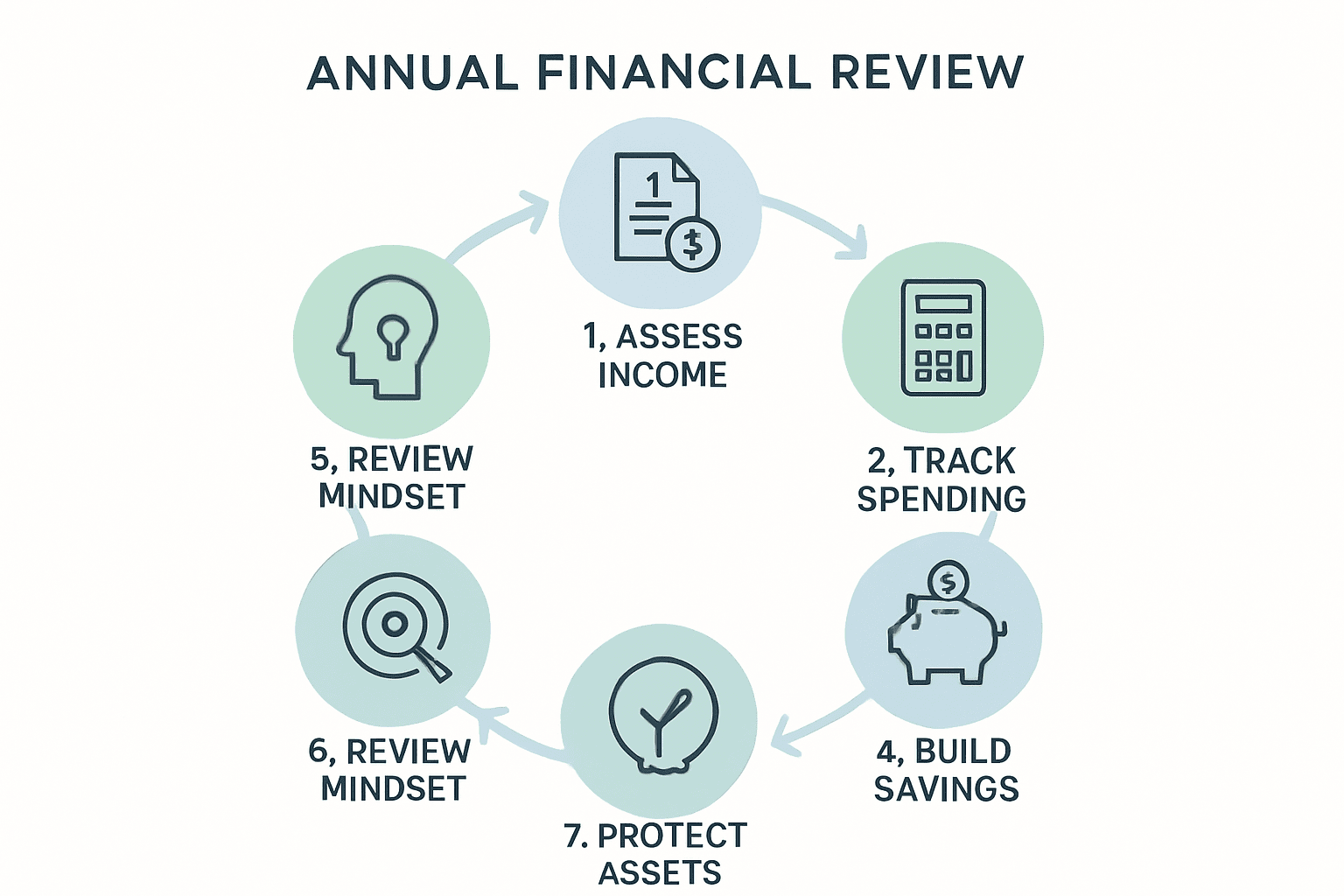
The 7-Point Annual Financial Review
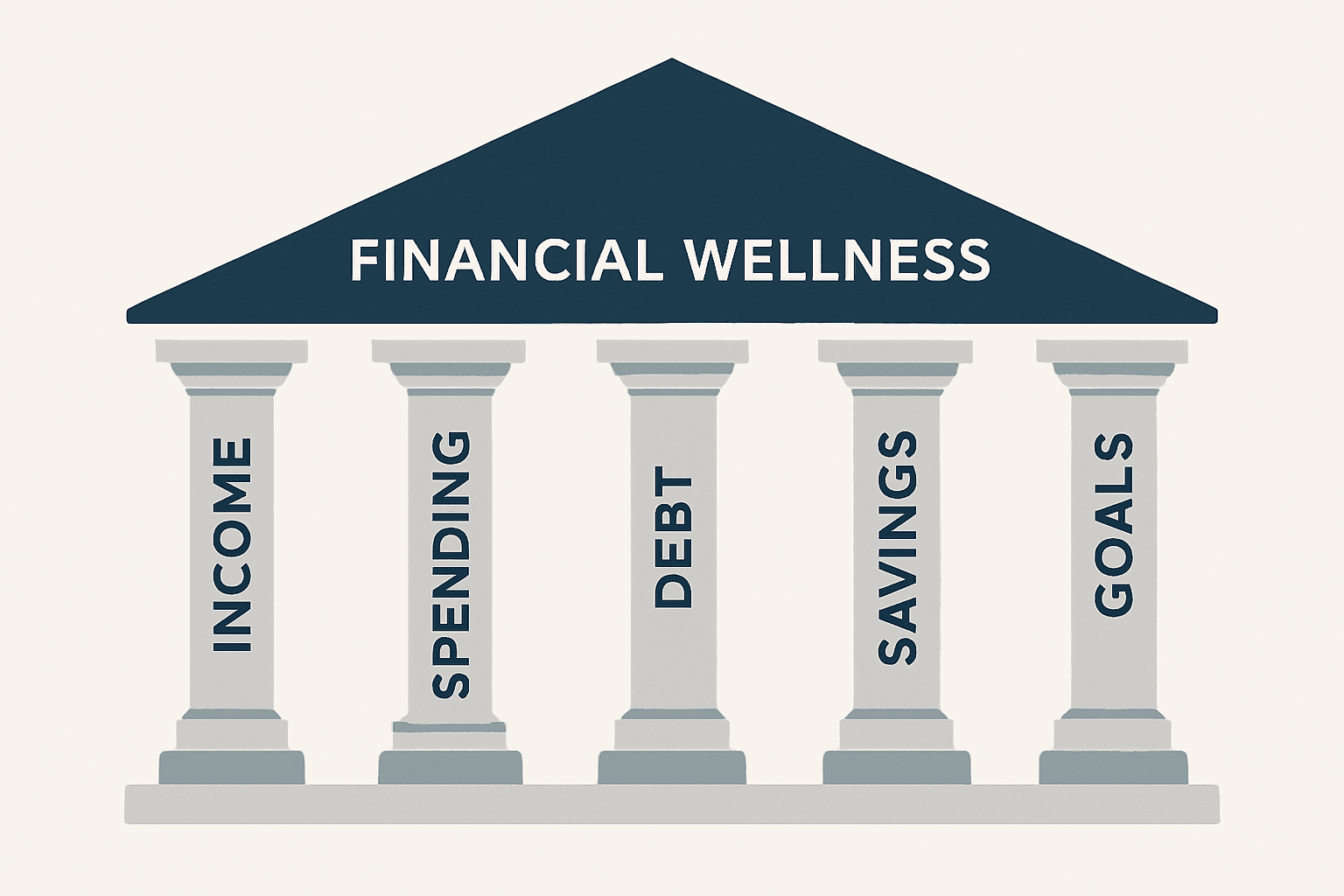
This review covers the five pillars of a strong financial life: income, expenses, debt, savings, and goals. Be honest with your answers this is for you.
1. Is Your Income Growing and Secure?
Your income is the engine of your financial life. It’s not just about the number; it’s about stability and growth potential.
- Self-Assessment: Did I receive a raise or promotion in the last year?
- The Checkup: Research your market rate. If you are an employee, make a plan to increase your income in the next 12 months (e.g., asking for a raise, learning a new skill).
2. Does Your Spending Match Your Values?
This is the most common blind spot. Knowing where every dollar goes is crucial. Your budget is a map that shows you how to get what you want.
- Self-Assessment: Can I easily account for my spending last month?
- The Checkup: Review your expenses. Are your biggest costs things that genuinely bring you joy? If you need a simple structure, the 50/30/20 Rule is a great starting point . “The 50/30/20 Rule Explained: A Beginner’s Guide to Effortless …”
3. Is Your Debt Under Control?
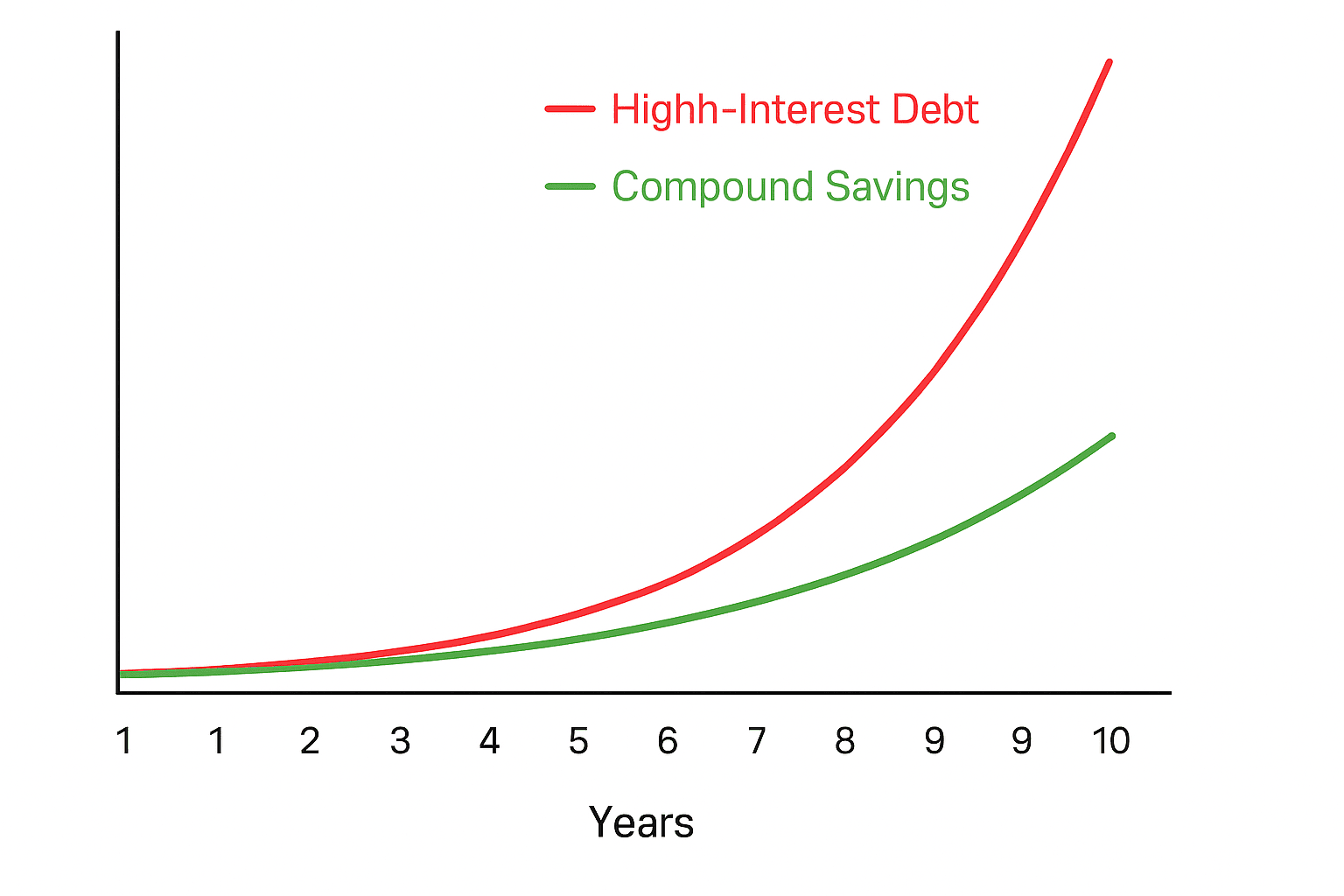
High-interest consumer debt (like credit cards) is a financial emergency. Your annual review must include a hard look at what you owe.
- Self-Assessment: What is the total interest I paid last year?
- The Checkup: List all your debts and their interest rates. Prioritize paying down the most expensive debt first.
4. Could You Survive a Surprise Expense?
An emergency fund is the single most important defense against financial disaster. Life happens—cars break down, pets get sick.
- Self-Assessment: If I lost my main income today, how many months could I cover my essential expenses?
- The Checkup: Aim for 3 to 6 months of essential living expenses saved. If you’re not there, make a plan to start building that cushion today. It’s the foundation of true money security . “How to Build an Emergency Fund: A Step-by-Step Guide to …”
5. Are You on Track for Your Biggest Goals?
What are you saving for? Retirement? A house? If you don’t know your destination, you can’t check your progress.
- Self-Assessment: Do I have specific, measurable goals for the next 1, 5, and 10 years?
- The Checkup: Review your progress toward your long-term goals, especially retirement contributions. If you need help setting clear targets, use a structured approach to define your future . “Financial Goals Checklist: Plan Your Path to Success in 2026 …”
6. How Do You Feel About Your Money? (The Mindset Check)
Your money mindset your beliefs and attitudes are often more important than your budget. Fear, guilt, or avoidance can sabotage the best plans.
- Self-Assessment: Do I feel anxious or guilty when I check my bank balance?
- The Checkup (Actionable Step): Try the “Money Journal” exercise. For one week, write down how you feel before and after every financial decision (a purchase, paying a bill, checking your balance). This simple step reveals the emotional triggers behind your spending habits.
7. Is Your Financial Protection in Order?
This is the boring, but crucial, part of the annual review. It’s about protecting what you’ve built.
- Self-Assessment: Are the beneficiaries on my retirement accounts and life insurance up to date?
- The Checkup: Check your credit report. Review your insurance coverage to ensure it still meets your needs.
Frequently Asked Questions (FAQ)
Q: How often should I do a financial check-up?
A: At least once a year, preferably around the same time (like the start of the new year or your birthday). However, you should review your budget and spending monthly.
Q: What is the most important first step?
A: The most critical first step is tracking your spending. You cannot manage what you do not measure. Read our guide on How to Start Budgeting: Your Beginner’s Guide to Financial Freedom to begin . “How to Start Budgeting: Your Beginner’s Guide to Financial …”
Q: What is a “money mindset”?
A: Your money mindset is the collection of beliefs and attitudes you hold about money. It influences every financial decision you make, often unconsciously. Recognizing and adjusting a negative mindset is key to long-term success.
Ready to Check In on Your Money?
Your financial life is not a one-time fix; it’s a continuous journey. By taking just an hour or two each year to complete this review, you move from guessing to knowing, and from anxiety to control.
Don’t put it off until next year. Start your check-up today. Choose one question from the list above and commit to finding the answer.
Ready to dive deeper into your spending? Read our guide on How to Start Budgeting: Your Beginner’s Guide to Financial Freedom to take the next step!
Keep reading
How Much of Your Salary Should You Save as an Expat?
Most expats have no pension waiting back home. Here's how much of your salary to save, using a simple 3-tier plan you can start this month.
Managing Money in Two Currencies: 7 Ways to Stop Losing to Fees
Earning in one currency and spending in another quietly costs you money. Here's where the fees hide and 7 ways to stop losing to them.
Emergency Fund for Expats: Why 3 Months Isn’t Enough
The classic 3-month rule ignores what happens to your visa when you lose your job. Here's how big an expat emergency fund really needs to be.
[…] start with $50 a month. If you’re not sure what you can realistically afford, start with a Financial Wellness Check-Up: 7 Questions to Ask Yourself Annually The goal is to break the habit of only paying minimums. Minimum payments are designed by banks to […]
[…] Compare what you spent vs. what you planned. No guilt – just data. Once a year, a bigger financial wellness check-up helps you see the bigger […]
[…] start with $50 a month. If you’re not sure what you can realistically afford, start with a Financial Wellness Check-Up: 7 Questions to Ask Yourself Annually The goal is to break the habit of only paying minimums. Minimum payments are designed by banks to […]