
Some links in this post are affiliate links. If you sign up through them, CentsForward may earn a small commission at no extra cost to you. Read the full affiliate disclosure.
The raise finally came through, and for about two weeks it felt like winning. Then the month-end balance looked exactly like it did before, and you could not point to a single big purchase that explained why.
That is lifestyle creep, and it is one of the quietest reasons smart, hardworking expats stay stuck. This guide shows the five places your raise usually disappears, why your brain allows it, and a simple payday rule that stops it without making you feel deprived.
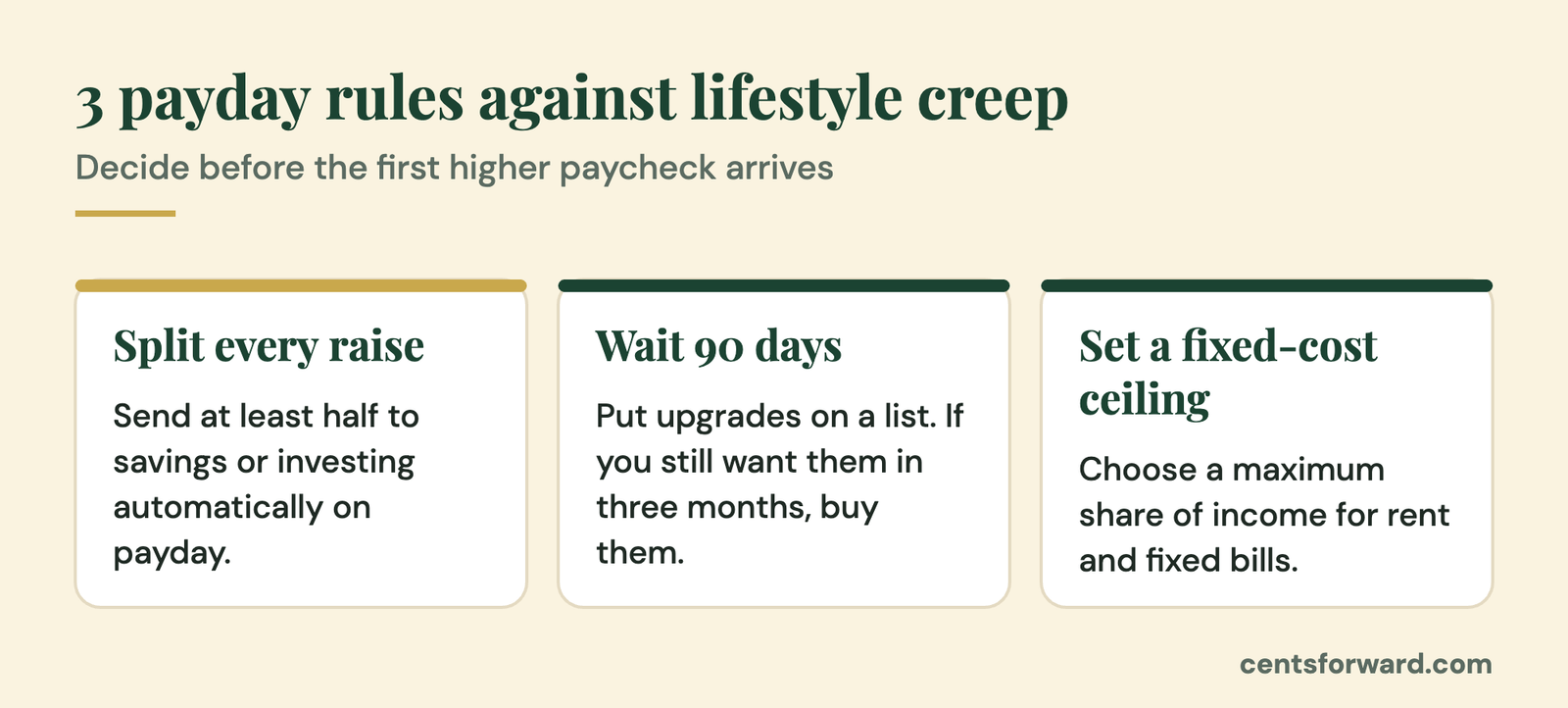
Quick answer: Lifestyle creep is the habit of letting your spending rise every time your income rises, so you never get ahead. To stop it, decide what happens to a raise before the first higher paycheck arrives: send at least half of it automatically to savings or investments, wait 90 days before upgrading anything, and keep your fixed costs below a ceiling you set in advance.
The Real Problem Is Not Your Salary
When money feels tight, the instinct is to earn more. It makes sense, and it is why so many people chase a promotion, then a better offer, then a better city.
But income only helps if some of it stays. Plenty of people earning $6,000 a month have less saved than people earning $3,000, because their spending quietly grew to match every increase.
The Reframe: A Raise Is a Decision, Not a Reward
Psychologists call the underlying effect the hedonic treadmill, the tendency to return to a baseline level of happiness after good news. A bigger apartment feels exciting for a few weeks, then it is simply your apartment, and the excitement is gone while the rent remains.
That means each upgrade buys less happiness than you expect, but it adds a cost that lasts. A raise feels like a reward, yet the smartest way to treat it is as a decision about which version of you gets paid first: today’s you, or the one you are trying to become.
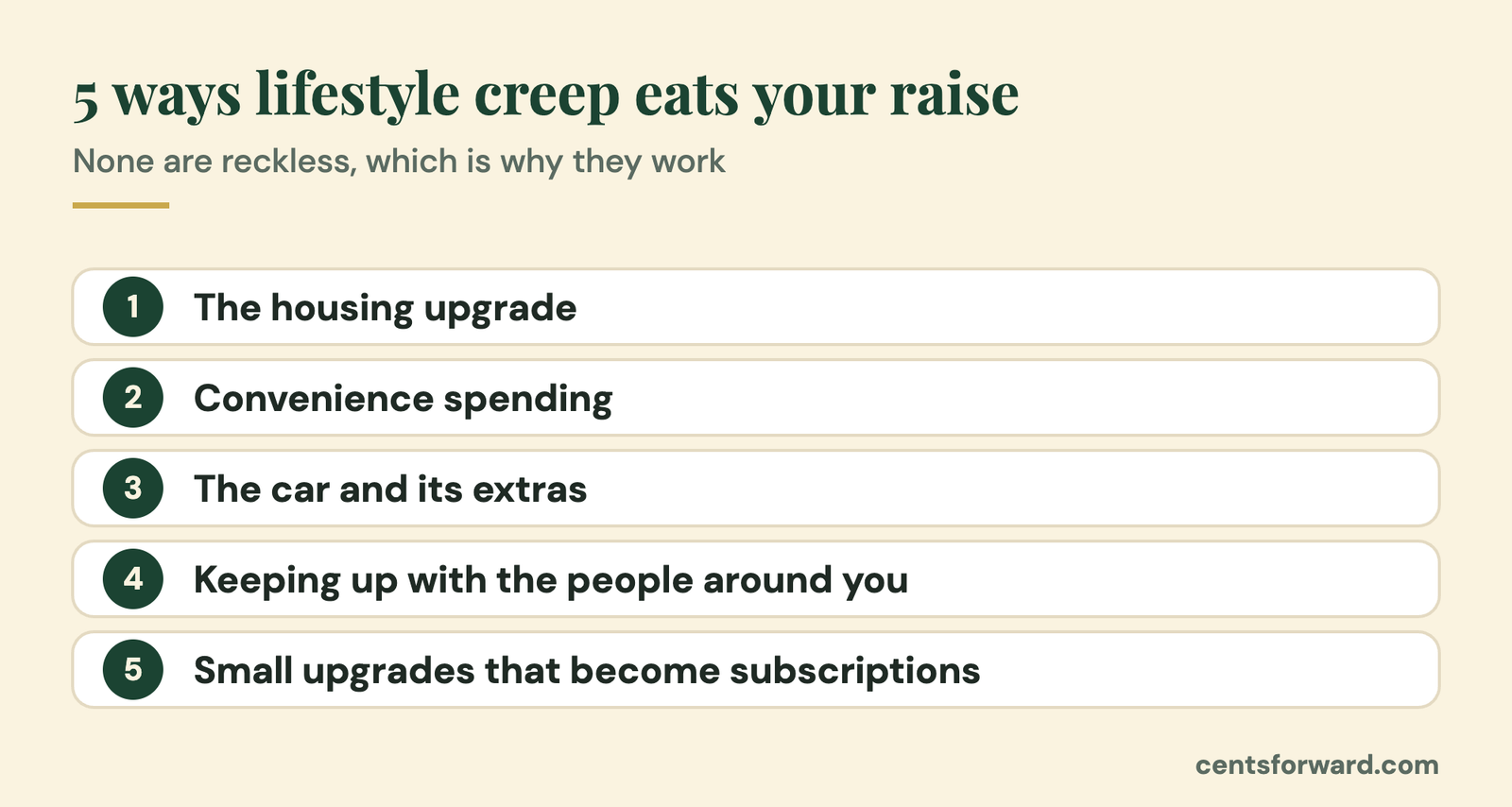
5 Costly Ways Lifestyle Creep Eats Your Raise
1. The housing upgrade
Rent is the biggest line in most expat budgets, and it is the easiest place for creep to hide. A nicer building, a higher floor and a shorter commute each look reasonable alone, but together they can swallow the whole raise and lock you into a bigger fixed cost.
2. Convenience spending
Delivery apps, taxis instead of the metro and cleaning services all save time, and some are worth it. The problem is that convenience becomes the default, and a habit that began as an occasional treat turns into hundreds of dollars a month you never decided to spend.
3. The car and its extras
A newer car brings payments, insurance, fuel and parking, and many car deals come with interest, which you may want to avoid anyway. The purchase price is only the start of what a bigger vehicle costs you each year.
4. Keeping up with the people around you
Expat life puts you next to colleagues who earn more, travel more and spend more. Without noticing, you start measuring your lifestyle against theirs instead of against your own goals.
5. Small upgrades that become subscriptions
New phones, premium plans and memberships each seem small. Added together over a year, they create a baseline of spending that is hard to cancel because you now treat it as normal.
Notice that none of these are reckless. That is why lifestyle creep survives: every single choice looks sensible when you look at it alone.
The Payday Rule That Stops Lifestyle Creep
You do not need to give up everything nice. You need three rules, set before the money arrives, so that your future self does not have to rely on willpower.
- Split every raise before it lands. Decide that at least half goes straight to savings or investing through an automatic transfer on payday. If it never reaches your spending account, you never feel it as a loss.
- Wait 90 days before any upgrade. Write the upgrade on a list and look at it again after three months. If you still want it, buy it from your remaining half. Most wants fade, which tells you something useful.
- Set a fixed-cost ceiling. Choose a maximum share of income for rent and other fixed costs, and treat it as a limit you do not cross. A common guideline for rent is around 30% of take-home pay, but your own numbers matter more than any guideline.
This works because it removes the monthly argument with yourself. Automation beats motivation every time.
What It Is Worth: A $400 Raise Example
Say your take-home pay rises from $4,000 to $4,400 a month. Here is what happens to that extra $400 over three years, before any investment growth.
Extra money saved after 3 years from a $400 monthly raise
Even the half-and-half version builds a $7,200 cushion without lowering your current lifestyle at all. That money covers a large part of a three-month emergency fund, which I explain in emergency fund for expats.
Once the cushion exists, the next job for that money is investing. You can see what $200 a month could grow to with the compound interest calculator on Investor.gov. The calculator is only a model, but it makes the long-term effect easy to see.
If you want a place to put it, Interactive Brokers accepts non-US residents, and my guide to starting investing as an expat shows what to buy first.
How to Define Enough Without Feeling Deprived
The fear behind most lifestyle creep advice is that you will live like a monk. You will not, because the goal is to spend on purpose, not to stop spending.
Try this simple exercise. List the five things that make your life noticeably better, such as a comfortable bed, good food with family or one trip a year. Protect those first, then ask whether the rest earns its place.
If you track your numbers, my 50/30/20 budgeting guide gives you a simple structure for wants, and sinking funds explained shows how to plan bigger purchases without guilt. For help with the mindset side, read the psychology of money and better spending habits.
Not sure how much you should be saving in total? My guide on how much of your salary to save as an expat gives realistic ranges, and the expat salary budgeting guide helps you set the ceiling for fixed costs.
Frequently Asked Questions
What is lifestyle creep?
Lifestyle creep, also called lifestyle inflation, is when your spending rises as your income rises, so you save no more than before. It usually happens through many small, reasonable upgrades rather than one big purchase.
How do I avoid lifestyle creep after a raise?
Decide what to do with the raise before the first higher paycheck arrives. Automatically send at least half to savings or investments, wait 90 days before upgrading anything, and keep your fixed costs under a ceiling you set in advance.
Is lifestyle creep always bad?
No. Spending more on things that improve your life, like health, family or time, is the point of earning more. It becomes a problem when the increase happens automatically and leaves your savings rate unchanged.
Why is lifestyle creep so common among expats?
Expats often earn more than they did at home, move into new social circles, and pay for convenience while living abroad. Those factors make upgrades feel justified, and the lack of long-term roots can make saving feel less urgent.
What percentage of a raise should I save?
A good starting point is at least half of every raise. If you are behind on an emergency fund or investing, saving more of it speeds things up without lowering the lifestyle you already have.
The Bottom Line
Lifestyle creep does not come from bad choices. It comes from good choices made one at a time, with nothing set aside first.
Set the split before your next raise lands, and let automation do the hard part. Want one practical money move in your inbox every week? Join the free CentsForward newsletter.
This article is for education only and is not financial advice. Your situation is personal, so consider speaking with a qualified professional before making major decisions.
Keep reading
Sinking Funds Explained: 5 Easy Steps to Beat Money Stress
It is the first week of September. Your salary landed three days ago, and already the school fees reminder is in your inbox, flight prices for...

How Much of Your Salary Should You Save as an Expat?
Most expats have no pension waiting back home. Here's how much of your salary to save, using a simple 3-tier plan you can start this month.
Managing Money in Two Currencies: 7 Ways to Stop Losing to Fees
Earning in one currency and spending in another quietly costs you money. Here's where the fees hide and 7 ways to stop losing to them.